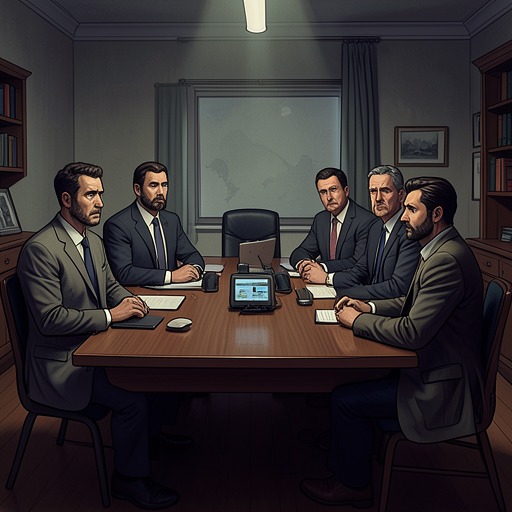
Billy Milligan's trial and acquittal by reason of insanity
The Minds of Billy MilliganWilliam Stanley Milligan's trial and acquittal by reason of insanity transformed a psychiatric account of fractured identity into a legal finding about criminal responsibility. The court ruled that mental illness had prevented him from distinguishing right from wrong or refraining from the charged acts, making Milligan the first person in U.S. history found not guilty of major crimes on this basis because of multiple personalities. The outcome rested on stipulated medical evidence, while the judge separately dismissed one rape count for lack of corroboration and a similar pattern of conduct.
Background and the Question of Competency
Before the trial, the defense had to address whether Milligan could understand the proceedings and assist in his own defense. His public defenders, Gary Schweickart and Judy Stevenson, continued to visit him in prison even after he had sent them a letter firing them. The Public Defender’s Office funded a psychological evaluation, and clinical psychologist Willis C. Driscoll tested Milligan on January 8 and 13, 1978.
Driscoll recorded an IQ score of 68, which he believed was lowered by Milligan’s depression, and diagnosed acute schizophrenia. His report described profound difficulty distinguishing self from environment, voices directing or berating Milligan, and an inability at that time to understand events or counsel in his own defense. These were clinical conclusions about Milligan’s present condition and capacity to participate—not, by themselves, a determination of his responsibility when the alleged offenses occurred.
On January 19, Stevenson and Schweickart presented the report to Judge Jay Flowers as evidence that Milligan could not assist in his defense. Flowers proposed an examination by the forensic psychiatry unit at Southwest Community Mental Health Center. The defense was concerned that the center generally supported the prosecution, and Schweickart sought assurance that statements made during its evaluation would remain privileged. The parties eventually agreed that prosecutors could question Milligan about incriminating statements from the examination only if he testified in his own defense. The defense accepted that compromise and allowed the evaluation to proceed.
Trial and Ruling
At the trial, the judge first dismissed the first rape count, citing the absence of corroborating evidence and of a similar modus operandi. The remaining decision turned on the insanity defense. Both sides waived closing arguments, and the medical evidence was stipulated rather than presented as a dispute requiring the judge to choose between competing accounts.
The doctors’ testimony, as summarized by Judge Flowers, established that Milligan had been mentally ill at the time of the charged acts, could not distinguish right from wrong, and could not refrain from committing them. With no contrary evidence before him, Flowers found Milligan not guilty by reason of insanity on counts two through ten. The ruling thus concerned criminal responsibility at the time of the offenses; it was distinct from the earlier question of whether Milligan could take part in the proceedings.
Consequences and Significance
The acquittal established a landmark: Milligan became the first person in U.S. history found not guilty of major crimes by reason of insanity because of multiple personalities. His case was already unusually public. His face had appeared on newspaper front pages and magazine covers, while reports of his examinations had reached television news and headlines around the world. The court’s decision brought the diagnosis and its legal consequences into wider public view.
Acquittal did not mean that the court considered Milligan well or that hospitalization was unnecessary. On December 10, 1979, a later court finding described his condition as a substantial disorder of thought, mood, perception, orientation, and memory that impaired judgment, behavior, and recognition of reality; it identified the condition as multiple personality and ordered hospitalization. That later finding belongs to the continuing legal and treatment history, not to the trial’s verdict itself. The distinction clarifies the ruling’s scope: the trial resolved whether Milligan was criminally responsible for the charged acts, while subsequent proceedings addressed his illness, risk, and need for hospital treatment.